



FIRST STEPS
CONTEXT

10-20′

Context Overview

Bitcoin is digital scarcity, a breakthrough discovery occurring at a key moment in History. We have entered a critical juncture. What can we say about it?

It's not the End of History

Cycles predicted it!

Let us check a few theories and approaches that describe economic, socio-cultural, and political cycles. They offer new and convincing perspectives on our current context. Given their outstanding predictive power over the past decades they deserve all our attention. 

The end of a debt cycle

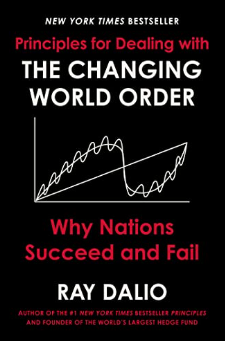
In The Changing World Order (2022), renowned billionaire and financial analyst Ray Dalio examines major economic and political cycles. He describes COVID as the trigger for a global economic recession on a scale larger than anything we have seen in the past 80 years, pointing out that this crisis was largely predictable, given the final stage of a long debt cycle we are in.

When debt cycles break, central banks devalue currencies by printing new money, which disrupts the entire economy, precipitating the collapse of reserve currencies and the emergence of a new monetary and financial order.  The level of debt is such that a reset of the monetary system is now inevitable. But what shall we do with the debt? A prolonged austerity cure? Boost global growth? Cancel the debt? Devalue it? Raise taxes?

A major crisis precedes a new order

The Fourth Turning (1997) is another important book which deals with history, political science, sociology, demography and philosophy. Its authors claim that history unfolds in generational cycles of 80-100 years, with four “turnings”.

How the turnings unfolds:

The Information Age is weakening nation states

The Sovereign Individual (1999) describes the advent of the Information Age as the most significant societal transition in centuries: the latest iteration of a series of mutations that have led humanity from the time immemorial of hunting and gathering to the agricultural and then the industrial era. 

The authors, who rightly predicted the discovery of crypto currencies, foresee a reduction in the returns to violence during this new era. Nation-state will be increasingly challenged by new sovereignties capable of effectively providing protection while consuming much fewer resources.

Inflationary money vs. deflationary technology

The Price of Tomorrow (2022) by Jeff Booth allows us to assemble another piece of the puzzle: it highlights the growing tension between the exponential deflationary force of technological progress in the digital age (the price of goods and services are dropping thanks to the efficiency gains produced by technology) and the headlong rush of inflationary policies inflating the money supply to counter it. The system will soon explode and will have to be replaced.

The onset of a new age of money

Kondratiev (K) cycles – Soviet economist, Kondratiev demonstrated that the growth of capitalist economies cyclically combines a phase of sustained long-term growth followed by a period of depression. The cycles that bear his name last 40-60 years and are the result of a radical innovation or an industrial revolution that leads to a virtuous cycle of investment.

The depoliticiZation of Money

State control of money

An imminent collapse of the system is likely and Bitcoin was designed to thrive under such circumstances. Before we engage in the learning process we need to address a specific question which conditions the freedom with which we can study Bitcoin: What is the justification for state control of money? What does history teach us about this? Why should this monopoly go on forever?
Key points

Bitcoin is a breakthrough discovery occurring at a critical juncture in history:  

contact us !